Escalation of Torture, Denial of Medical Care and Crackdown on Political Prisoners in Iran’s Prisons
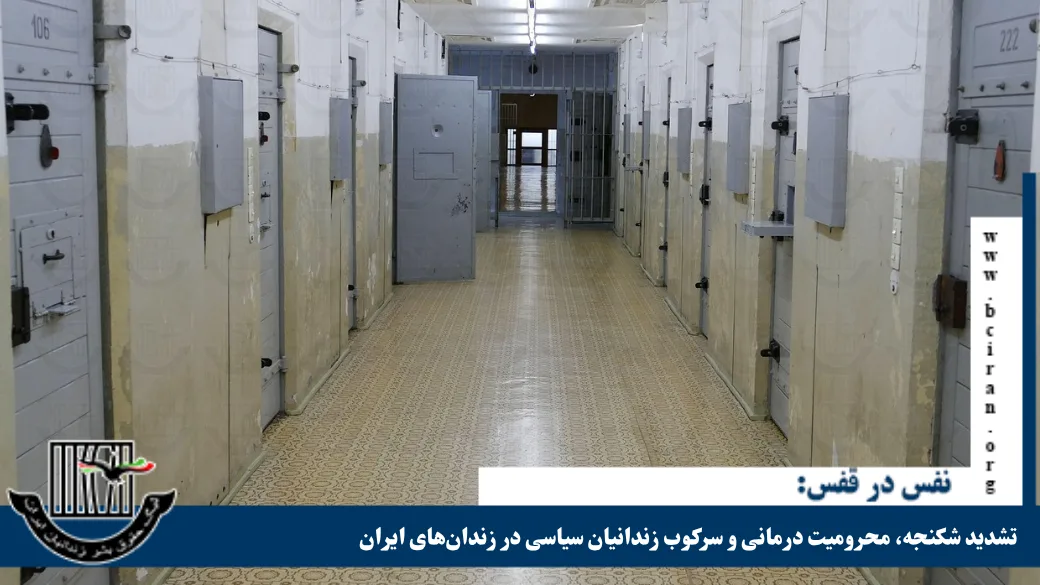
Breathing in Confinement, Sunday, 15 November 2026: Reports point to escalating torture, denial of medical care and repression of political prisoners in prisons across Iran. Political prisoners held at Sheiban Prison in Ahvaz face beatings, deprivation of drinking water, food and medicine, and punitive transfers to solitary confinement. At the same time, reports from Greater Tehran Prison, Dastgerd Prison in Isfahan and other prisons across the country describe continued violence, poor detention conditions, denial of medical care and punitive treatment of prisoners who protest. The Prisons Organization and other authorities responsible for prisoners’ custody bear direct responsibility for these actions.
According to Breathing in Confinement, the news outlet of Prisoners’ Rights in Iran, information published on Saturday, 14 November, about political prisoners at Sheiban Prison in Ahvaz described physical and psychological pressure against them. Some prisoners have also appealed for help, asking for their conditions to be publicised and the mistreatment to stop.
According to the published information, political prisoners—particularly those whose convictions have become final—are being severely beaten by officers. In some cases, officers have used hoses containing pieces of copper and iron to beat prisoners, then transferred them to solitary cells without adequate access to water, food or medicine.
Other reported abuses include cuts to water and electricity and the deprivation of prisoners in solitary confinement of the basic necessities of life. These conditions put prisoners who are ill or injured at particular risk of further physical and psychological harm. The prisoners have called for torture and mistreatment to stop, access to basic necessities to be restored, and their physical and medical needs to be addressed urgently.
Critical conditions for ill prisoners and death-row inmates at Sheiban Prison
The physical condition of Mokhtar Al-Boushoukeh, an Ahwazi Arab political prisoner held at Sheiban Prison, has been described as alarming. He is being held in the prison’s quarantine unit and suffers from kidney disease, a hernia and urinary obstruction. A urinary catheter was inserted on 8 November. His condition has heightened concern about whether he can access specialist medical care and appropriate treatment.
Mohammadmehdi Parsa, a 21-year-old protester sentenced to death and 20 years in prison, is also being held there. Other political prisoners at Sheiban include Gholamhossein Kalbi, who is serving a life sentence and has been imprisoned since 2000; Yahya Navasseri and Abdolamem Zaeri, both sentenced to 25 years in prison; and Masoud Jamei, Farshad Etemadifar, Alireza Mardasi, Hassan Mosalavi and Reza Abdali, who have been sentenced to death.
Denying sick prisoners appropriate treatment and holding them in conditions that endanger their health and lives is more than an administrative violation. It may constitute a violation of the right to health and, in some cases, the right to life. Prison authorities are obliged to ensure that all prisoners have equal access to necessary medical services and specialist treatment.
Beatings and denial of medical care at Greater Tehran Prison
In another reported case of violence against prisoners, on Friday, 13 November, several political prisoners at Greater Tehran Prison were beaten after protesting the officers’ treatment of a fellow prisoner.
The incident began after Moein Najafi was taken to the duty officer’s room. Tensions rose when prisoners protested this action and the officers’ treatment of Ramin Joonaki. Around 10 officers, accompanied by prison personnel, then entered Hall 4 and beat several prisoners.
During the raid, Amirhossein Dastjardi sustained an injury to his chest. The officers prevented him from being taken to the prison infirmary. Moein Najafi and Ramin Joonaki were also transferred to solitary confinement. Ramin Joonaki was returned to the ward after several hours, but Moein Najafi was still being held in solitary confinement when information about the incident was published.
Preventing an injured prisoner from receiving medical care and using solitary confinement to punish and suppress protest violate prisoners’ fundamental rights and are contrary to the legal obligations of prison authorities.
Overcrowding and Poor Conditions at Dastgerd Prison in Isfahan
Information published about Dastgerd Prison in Isfahan also points to severe overcrowding and poor hygiene and living conditions. According to a report published in August this year, the prison population was estimated at more than 10,000, while its standard capacity was said to be around 4,000 to 5,000.
This substantial gap between the prison’s capacity and the number of prisoners has led to a shortage of beds and space, more prisoners having to sleep on the floor, and added pressure on healthcare and sanitation facilities. In some wards, the number of prisoners has reportedly been several times the cells’ capacity. Other reported problems include limited access to medical care, poor nutrition, and difficulty communicating with family members and lawyers.
Overcrowding not only threatens prisoners’ physical and mental health, but also makes it harder for them to access basic necessities and live in humane conditions. Prison authorities are required to uphold humane standards and prevent prisoners from being held in conditions that endanger their health and dignity.
Ongoing Pressure on Prisoners in Other Prisons
At Qezel Hesar Prison in Karaj, prisoners have repeatedly staged sit-ins and hunger strikes to protest the widespread implementation of death sentences. In some cases, the protests ended after authorities promised a temporary halt to executions. However, concerns about the continued implementation of death sentences and pressure on prisoners remain.
Reports have also described political and religious prisoners in Evin and Adelabad prisons in Shiraz being denied transfer to medical facilities outside prison, despite suffering from serious illnesses. Other concerns include detainees being left in legal limbo and being denied access to a lawyer of their choice, particularly during the early stages of judicial proceedings.
The Government’s Legal Responsibility for Prisoners’ Health and Safety
Under the United Nations Standard Minimum Rules for the Treatment of Prisoners, known as the Nelson Mandela Rules, all prisoners must have access to safe drinking water whenever they need it, adequate food, proper sanitation and essential healthcare. The Rules absolutely prohibit torture and all forms of cruel, inhuman or degrading treatment or punishment. Corporal punishment, reducing a prisoner’s diet or denying them drinking water, and using solitary confinement in ways prohibited by the Rules—including indefinite or prolonged solitary confinement—are also prohibited.
Article 7 of the International Covenant on Civil and Political Rights prohibits torture and all forms of cruel, inhuman or degrading treatment or punishment. Article 10 of the Covenant also requires that all people deprived of their liberty be treated humanely and with respect for their inherent dignity. These obligations apply to every prisoner, regardless of the charge, political or religious affiliation, or sentence imposed.
Taken together, these reports paint a troubling picture of conditions in Iran’s prisons. Beatings, denial of medical care and basic necessities, punitive use of solitary confinement, and inadequate detention conditions are putting prisoners’ health, safety and lives at risk.
The government’s responsibility towards people deprived of their liberty goes beyond keeping them in prison. It also includes protecting their lives, health, safety and human dignity. Independent, prompt and impartial investigations into reports of torture and mistreatment, an immediate end to these practices, guaranteed medical care for ill and injured prisoners, an end to the deprivation of basic necessities, and accountability for those who ordered or carried out these violations are legal and human rights obligations of the government.
Leave a Reply