Qezel Hesar Authorities Seek to Separate Strike Organisers Through Forced Transfers of Prisoners
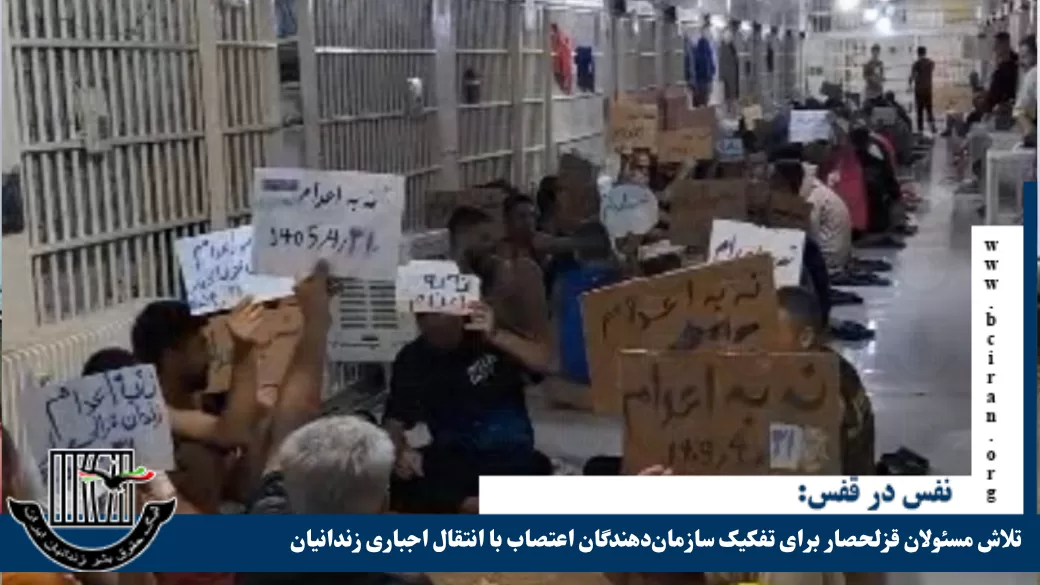
Breathing in Confinement, Saturday, 15 August 2026: Authorities at Qezel Hesar Prison are seeking to transfer prisoners held in Hall 4 of Unit 2 to other halls and units, citing renovation work as the reason. At the same time, prisoners have been told that they have until 16 August to submit requests for transfer to the unit of their choice. According to informed sources, this measure could provide a basis for portraying the forced transfers as lawful and voluntary.
According to reporters from Breathing in Confinement, the news outlet of the Prisoners’ Rights League in Iran, the transfers are taking place amid efforts by prison authorities to separate a number of organisers and participants in the recent strike and disperse them across different units and halls.
According to the report, the purpose of dispersing these prisoners is to prevent the re-emergence of collective and organised protests within the prison, particularly amid growing concerns over the resumption of executions of death-row prisoners convicted in drug-related cases. Informed sources believe that by separating key figures involved in the strike, prison authorities are seeking to reduce prisoners’ ability to coordinate and organise further protest strikes.
Forced Transfer of Approximately 200 Prisoners from Hall 4
Unit 2 of Qezel Hesar Prison consists of five halls, two of which are designated for death-row prisoners convicted in drug-related cases. Before the recent transfers began, more than 300 prisoners were held in Hall 4 of this unit. Following the transfer of a number of prisoners to other units, the population of the hall fell below 300.
According to information received by Breathing in Confinement, a significant number of prisoners from Hall 4 have so far been transferred to other units, leaving approximately 200 prisoners in the hall. These remaining prisoners are also expected to be forcibly transferred to other units and halls within the prison.
Informed sources say that prisoners have been given a deadline to submit a “transfer request,” even though the transfers themselves have been planned by prison authorities. As a result, if the plan is implemented, transfers that are effectively compulsory could be recorded and presented in official documents and reports as having been carried out at the prisoners’ own request.
End of the 16-Day Hunger Strike by Death-Row Prisoners
These measures follow the end of a hunger strike involving approximately 1,500 death-row prisoners in Unit 2 of Qezel Hesar Prison. The strike began in protest against the resumption of executions and the transfer of six prisoners for execution. It ended after 16 days, following the fulfilment of some of the strikers’ demands, the return of the transferred prisoners to their hall, and assurances given by prison authorities and some judicial officials.
During the strike, the protesting prisoners called for a halt to executions, a review of death-row cases, scrutiny of the process through which death sentences had been issued, and revisions to laws and regulations governing drug-related offences.
According to reports received, prison authorities and some judicial officials promised during negotiations with prisoners’ representatives that the executions of prisoners sentenced to death in drug-related cases would be suspended pending consideration of their demands and a review of their cases.
Nevertheless, the transfer and dispersal of prisoners following the end of the strike have heightened concerns over the possible resumption of executions and attempts to prevent further collective protests within the prison.