Deteriorating Health of Prisoner in Nur Prison; Denied Follow-Up Treatment for Five Months After Being Shot
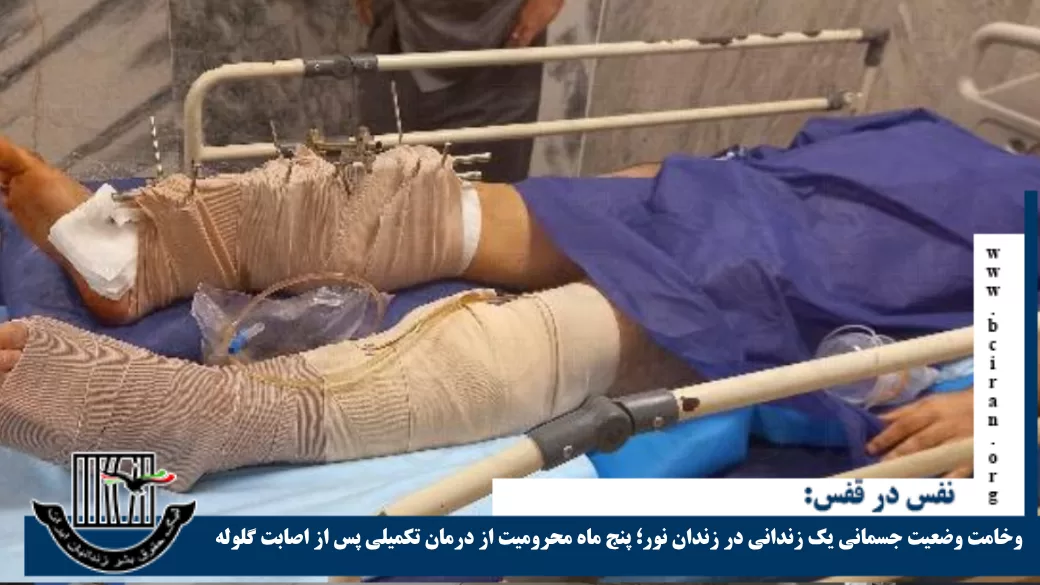
Breathing in Confinement, Monday, 20 July 2026: Reza Erfani, a 41-year-old prisoner held in Nur Prison who was wounded by five gunshots during his arrest, has remained without access to follow-up medical treatment five months after his detention. According to information received by Breathing in Confinement, despite the prison doctor confirming the need for his transfer to an external medical facility, prison authorities have so far refused to authorise his transfer to hospital. The continuation of this situation has raised growing concerns about the prisoner’s physical health.
According to information provided to Breathing in Confinement by an informed source, Reza Erfani, 41, was a dismissed employee of the Elimalat Tourism Complex in Nur County. Before his arrest, he had repeatedly approached the complex’s managing director seeking payment of his outstanding wages and other financial entitlements. However, despite repeated promises, the money owed to him was not paid.
The source said that the pressures arising from financial hardship and the prolonged uncertainty over receiving his unpaid wages and entitlements had placed him under severe psychological distress, and that he had previously attempted suicide on several occasions.
In March this year, following the killing of the managing director of the tourism complex, Reza Erfani was arrested on suspicion of murder.
According to information received, during his arrest, Reza Erfani was shot four times in the legs and once in the lower abdomen, sustaining serious injuries.
Breathing in Confinement has obtained a video showing the moment he was shot and arrested. A preliminary review of the footage and the information received raises questions about the use of firearms during his arrest. However, the circumstances surrounding the incident still require independent investigation and verification.
Following his transfer to hospital, Reza Erfani underwent initial surgery; however, according to information received, his treatment was never completed.
According to the report, he still requires at least two further operations on his legs, a bone graft, and continued specialist medical care.
An informed source told Breathing in Confinement that the hospital had estimated the cost of continuing his treatment at approximately 600 million tomans. As Mr Erfani was unable to afford this amount, he was transferred to Nur Prison before his treatment was completed. His transfer to prison while he was still in need of specialist medical care resulted in the interruption of his treatment.
According to reports received, his right leg has developed an infection and his physical condition has deteriorated in recent months. Fellow prisoners told Breathing in Confinement that he faces serious difficulties even in carrying out everyday activities, including using the toilet, and relies on other prisoners for assistance with many of his daily needs.
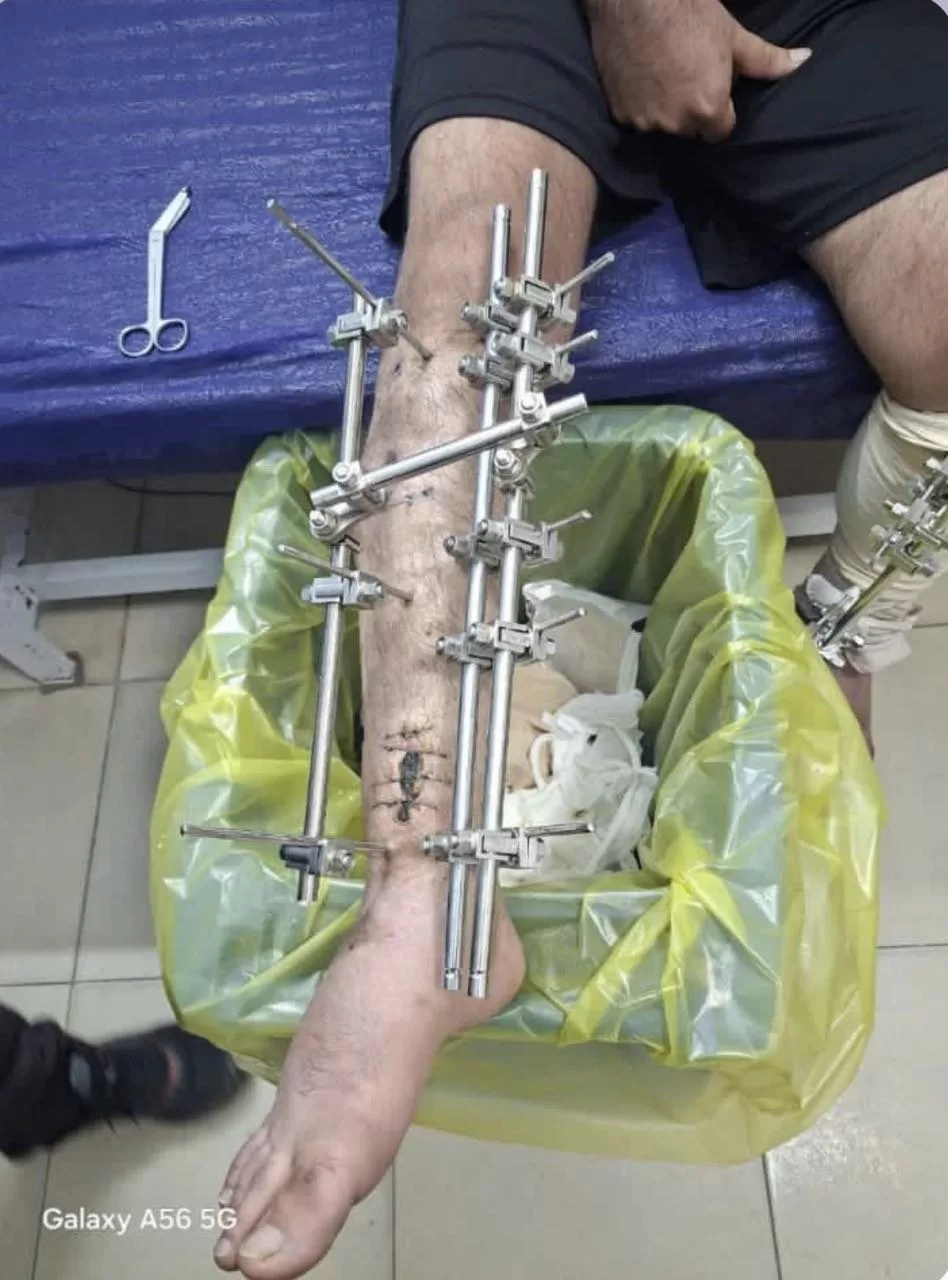
According to informed sources, the prison doctor has also confirmed the need for his transfer to an external medical facility; however, prison authorities have so far refused to authorise his transfer.
Reports also indicate that Reza Erfani urgently requires continued treatment, further surgery, and a bone graft to prevent the infection from progressing and to preserve his mobility.
According to information received by Breathing in Confinement, in response to Reza Erfani’s repeated requests to be transferred to hospital, some prison officials have allegedly stated that, because he is accused of murder, they are unwilling to provide him with medical care.
If these statements are accurate, denying a prisoner access to medical treatment on the basis of the nature of the charges against him is incompatible with the fundamental rights of prisoners and the principle of equal access to healthcare. This is particularly concerning given that, at the time of this report, he remains an accused person in the case, and no information has been published indicating that a final judgment has been issued against him.
Under established principles of international law and the United Nations Standard Minimum Rules for the Treatment of Prisoners, known as the Nelson Mandela Rules, access to appropriate healthcare, regardless of the nature of a person’s alleged offence or conviction, is a fundamental right of all individuals deprived of their liberty.
These rules emphasise that healthcare must be provided without discrimination and solely on the basis of medical need, and that the responsible authorities have a duty to safeguard the health and lives of prisoners.
In Reza Erfani’s case, the continued denial of follow-up treatment, despite the prison doctor confirming the need for his transfer to an external medical facility, together with the reported statements suggesting that medical care has been withheld because of the nature of the charges against him, raises serious concerns regarding respect for the right to healthcare, the right to life, and the prohibition of cruel, inhuman or degrading treatment.
If this situation continues and the infection progresses, or complications arise as a result of delays in treatment, the risk of irreversible harm to his health will increase. Such circumstances would be inconsistent with international standards concerning prisoners’ rights and the state’s obligations regarding the health of individuals in its custody.
Five months after his arrest, during which he was shot five times, Reza Erfani remains detained in Nur Prison with untreated injuries, a progressing infection, and a need for further surgery. According to information received by Breathing in Confinement, the prison doctor has confirmed the need for his transfer to an external medical facility, while reports also indicate that he is financially unable to cover the costs of his treatment.
Numerous cases of prisoners dying in Iran following delays in access to treatment or deprivation of medical care have been documented in recent years. Under these circumstances, the continued refusal to transfer Reza Erfani to an appropriate medical facility, despite the prison doctor confirming his need for further treatment, raises serious concerns for his health and life.