Tensions in Evin Prison Women’s Ward Following Prisoners’ Protest Over Detention Conditions
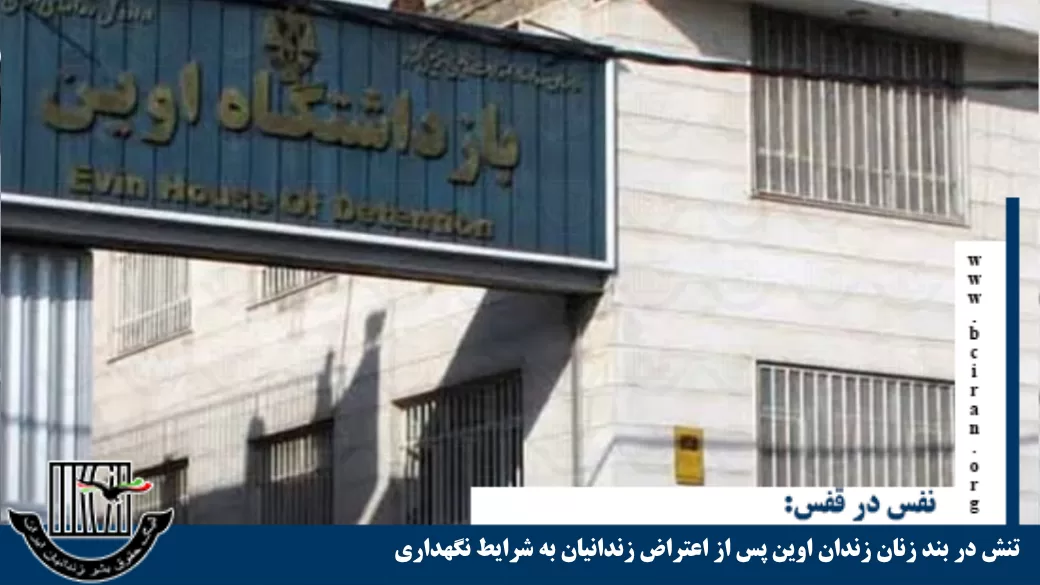
Breathing in Confinement, Monday, 13 July 2026: A collective protest by political and prisoners of conscience held in the women’s ward of Evin Prison over poor detention conditions and the conduct of prison authorities has reportedly been met with the intervention of prison guards, creating a tense and highly securitised atmosphere. According to reports, several prisoners have been threatened by security personnel.
According to Breathing in Confinement, the news outlet of the Prisoners’ Rights League in Iran, on Sunday, 12 July, at a time when the women’s ward at Evin Prison was already facing limited capacity, inadequate space, and severe overcrowding, at least 60 women convicted of ordinary offences were transferred from Qarchak Prison in Varamin to Evin Prison. The transfer was reportedly carried out without the necessary infrastructure or accommodation arrangements to house the additional prisoners, resulting in further overcrowding and prompting protests among inmates in the women’s ward.
According to the report, the demonstrations were peaceful and focused on detention conditions, welfare concerns, and the increasing number of prisoners confined within the ward’s limited space. Following the protests, prison guards entered the women’s ward to regain control of the situation and, according to the reports received, threatened a number of prisoners.
Reports further indicate that several political prisoners and prisoners of conscience serving heavy sentences, including death sentences, were threatened with transfer to other facilities or separation from the general prison population.
Further reports have also emerged regarding the condition of Masoumeh (Farah) Nassaji, a 64-year-old political prisoner. According to these reports, Ms Nassaji, who suffers from serious health problems, was allegedly assaulted by prison guards before being transferred to solitary confinement in Evin Prison.
The forced transfer of prisoners without regard to prison capacity, detention in overcrowded conditions, the use of solitary confinement as a punitive measure, and the violent response to peaceful protests are all practices that are inconsistent with international human rights standards. Under the United Nations Standard Minimum Rules for the Treatment of Prisoners (the Nelson Mandela Rules), states are required to ensure humane, safe, and dignified conditions of detention for all persons deprived of their liberty.
Even after conviction, prisoners retain fundamental rights, including the right to humane conditions of detention, access to adequate healthcare, protection from torture and other cruel, inhuman or degrading treatment or punishment, and the right to raise peaceful complaints regarding prison conditions.