Qezel Hesar Prisoners Launch Hunger Strike After Six Death Row Inmates Transferred to Solitary Confinement
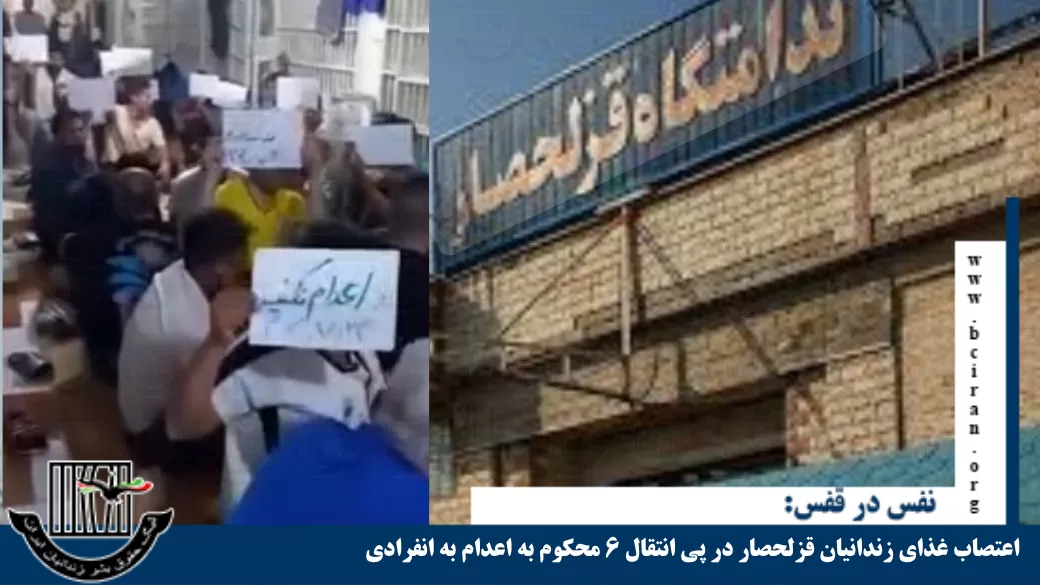
Breathing in Confinement, Monday, 13 July 2026: Prisoners in Unit 2 of Qezel Hesar Prison in Karaj have begun a hunger strike in protest against the transfer of at least six death row prisoners to solitary confinement.
According to Breathing in Confinement, the news outlet of the Prisoners’ Rights League in Iran, on Monday, 13 July, at least six prisoners sentenced to death at Qezel Hesar Prison were transferred to solitary confinement cells. The prisoners had previously been arrested and sentenced to death in separate cases involving drug-related offences. According to the report, Breathing in Confinement has verified their identities but is withholding their names for security reasons.
The transfer of the death row prisoners to solitary confinement has prompted widespread concern among other inmates. In response, prisoners held in Unit 2 have launched a hunger strike by refusing to accept their food rations. The protest is intended to oppose the imminent implementation of the death sentences and to draw the attention of the authorities and international human rights organisations to the situation of their fellow prisoners.
This development comes after a similar protest in October of last year, when approximately 1,500 death row prisoners in the same unit of Qezel Hesar Prison staged a hunger strike and sit-in protest against impending executions. That large-scale protest, which received significant coverage from the media and human rights organisations and was documented extensively by Breathing in Confinement, ended after six days following the visit of a representative of the Iranian Judiciary. At the time, prisoners were reportedly promised that executions would be suspended, those transferred to solitary confinement would be returned to the general prison population, and certain legal reforms would be considered.
Several months later, however, and despite those assurances, the practice of transferring death row prisoners to solitary confinement has reportedly resumed. This has heightened fears that executions are about to recommence and has triggered a new wave of protests among prisoners.
The widespread use of the death penalty, particularly for drug-related offences, has long been criticised by international human rights bodies. Under international human rights standards, including the International Covenant on Civil and Political Rights (ICCPR), the death penalty, where it has not been abolished, should be restricted to the “most serious crimes.” Many international human rights mechanisms have consistently maintained that drug-related offences do not meet this threshold. Consequently, there have been repeated calls in recent years for Iran to reform its criminal laws and reduce or abolish the use of capital punishment for such offences.